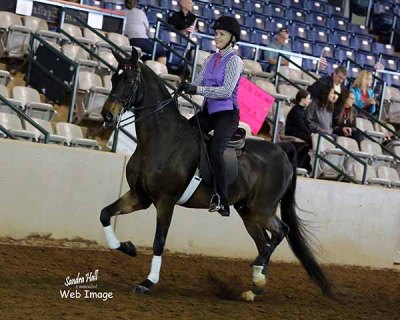
So there I was, standing in line at a gas station in Murfreesboro, TN. Soda in one hand; money in the other. Mind undoubtedly several miles away at the show grounds [Show Report].
Suddenly, the dude in front of me tells the clerk to ring up my soda. He’s going to buy it for me. Huh? What? He turns to me, explains that he tries to do something for someone every day, no matter how little.
On the contrary, I said. Not at all little. The generosity far exceeds the cost. He pays. I stand by in stunned bemusement. I thank him. We part ways.
The can in question.
My biggest problem? Getting up the nerve to pay it forward.
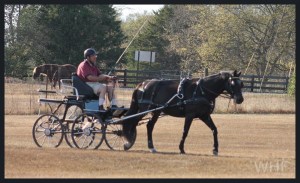
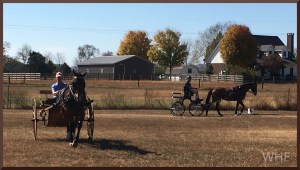
While I was showing in Murfreesboro, TN, [Show Report 2016] Greg was 30 miles up the interstate in Franklin, TN, at Whip Hand Farm for a driving clinic with Robin Groves. I’m sure he had a lovely time, learned much, yadda, yadda. More importantly, how did this effect moi?
Last year, Greg drove up to Nationals for the day on Sunday. (What a guy, right?) I was a hot mess [Show Report 2015]. It helped.
This year, Greg’s plan was clinic on Saturday, show on Sunday. I was undecided about going up to watch. Did I really want to sacrifice my nap time? You laugh. That nap break has become an important part of my show life. Come the day, I was so high from my second place in Saturday’s Championship class that I drove up in a haze of acetate. Only to fall asleep in my car as soon as I arrived.
I woke up in time to watch part of his class, then drive back for the evening session. I also decided that I was in a much better place mentally [Lengthen Your Reins]. Therefore, he should stay at the clinic and skip the show. Yes, I would’ve loved to have him there, but I didn’t need to have him there. Non-ASB driving is so scarce for us, he should take advantage when he can.
Kate & Jewel, Greg & Bliss Photo by Whip Hand Farm
Life in a two (three?) discipline household is gonna be interesting.
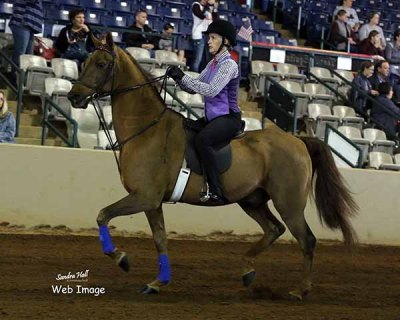
Purchased from Sandra Hall Photography. There are also cute group shots under Parade of Barns: Horse Show Proofs > National Academy Championship Horse Show > POB – Parade of Barns > NA16-POB-003 to -005.
Our setup for Nationals. I know I am over the show when my trainer’s voice no longer echoes in my head and I no longer see this when I close my eyes. Not there yet. Photo by Courtney Huguley
Friday Morning
2A. Adult WTC Equitation with Sam, 4th of 8
7A. WTC Pleasure Adult with Iggy, 2nd of 8
(The class was split, but we all went forward. Had there been more entries, 8 would have moved on.)
Saturday Morning
29. WTC Equitation Adult Championship with Sam, 6th of 16
34. WTC Pleasure Adult with Iggy, 2nd of 16
(Top ten went forward to Sunday.)
Sunday Morning
59. Adult Pleasure WTC National Finals with Iggy, 3th of 10
67. Adult WTC Equitation National Finals with Iggy, 4th of 10
(Ribbons to 3rd place.)
Photos Sandra Hall Photography > Horse Show Proofs > National Academy Championship Horse Show > days & classes as above.
Overall
TOUGH. The competition took a quantum leap since last year. Every class was filled with good performances. No sparkling standouts, no bless-your-heart rides. Solid quality across the board, in classes of 15 or 16 riders. Only one of our riders went straight through to Sunday, the rest of us had to qualify at least once: 5 out of 10, 8 out of 16, 10 out of 15. Any ribbons were hard earned.
In my division, I had to qualify on Saturday by being top 10 out of 16. First time I’ve had to do that. Historically, there have been less than 10 old farts, allowing us to skip merrily through the weekend. In the finals, I slid down a few places, from 2nd & 2nd last year to 3rd & 4th this year. I had to ride like a bandit to even do that well.
I would have liked to do better. Short of the gold medal/all the blues/all 10s, one always does. I’m okay with my results and pleased with how I rode. Mostly.
Classes
The weekend is quickly receding into a blur. Specifics were posted in the tweet stream, scheduled for Saturday. I mostly remember the last day. Since the judges seemed to prefer me on Iggy, I rode him for both pleasure (showmanship) and equitation.
In the first final on Sunday, I heard a lot of “Sit up. Sit back.” as I went around the ring. In the second final, my rail work was better. Less correction, more “Smile”. Apparently resting zombie face is becoming an issue [Show Report ACCHS]. Six were asked to do the pattern.
The pattern is usually my jam. This one was not. When I am trying to get a lot done in a short amount of time, I can be, um, abrupt. Previous Horse and Sam were/are okay with this. Previous Horse wanted to hear, Stop, Go, Turn, Jump. Anything else was extraneous noise. Rodney, Mathilda, Iggy, most horses require more discussion of upcoming life events. Parts of the pattern were good. I had the best line and I stuck it. Other parts, I could tell I was muscling Iggy about rather than being subtly effective. It wasn’t horrid, but okay was not gonna frost the cupcake.
I suspect that even a good pattern would not have made the critical difference. The judges were in love with the first place rider in my division (she won six times). The only chance the rest of us had at the blue was if she face planted (metaphorically). She didn’t. They were equally happy with the second place rider. The only class where she finished lower than first or second was on Friday when I beat her. So, I was fighting for 3rd, maybe 2nd as a long shot. Absolutely, I would have been thrilled to place higher. Ribbons is ribbons. But after four years of seconds & thirds in the finals (4 of the first, 3 of the latter), I wasn’t going home with the one ribbon that continues to elude me. My white whale.
It would have been nice to finish on a high note. OTOH, I would have found something else on which to perseverate at 4 in the morning.
Will I Go Back Next Year?
Oh. H*ll. No. I am tired of Academy. I am finished with Nationals. If I never see Tennessee Miller Coliseum again, it will be too soon. Over. Done. Not happening. The curtain is down and has been nailed to the floor.
It is possible that I am overreacting. Each year I say never again.
I could lead a rich and fulfilling life if I never rode in another equitation class. [Show Report 2014]
Each year I am sucked back into the whirlpool.
I find it easier to make a big push if I have a sense of a finish line. I persevere by promising myself an end in sight. Once I reach the finish line, the end of a big job, the other side of Nationals, I collapse and swear never again to move, to work, or to show in Murfreesboro. Then recovery sets in and I take an interest in my surroundings once more. The probleminconvenience design choice at the moment is that if I want to show, my option is Academy saddle seat. And I do like to horse show.
Before I can talk about the show, I have to tell you about my lesson the day before we left. Iggy and I had been doing okay but not great. We won a class [Show Report ACCHS 2016] and got good reviews at the last pre-show group lesson, but I knew we could be better. I just couldn’t see how. If Iggy was up and going like a fancy Saddlebred, I could equitate. If he was out of position, so was I. I knew I needed to sit back, but couldn’t seem to. So Coach Courtney says “Lengthen your reins.”
Really?
Seriously?
I can do that?
I had no idea.
“Follow the horse’s mouth with your hands.” “Keep a steady contact.” “Shorten your reins.” “Don’t drop your reins.” I have heard variations on these ad infinitum. Now that I had finally learned to pick up my reins [Camp Tweets], I was determined to hang on to them. I wasn’t seizing the reins in a death grip. I wasn’t balancing off the reins. I was being soft and fluid with my hands. However, I was trying to keep my shoulders and hands still, to maintain my rein at the correct length, and yet adjust to the horse’s motion. I could fake it well enough that it looked okay until it all went wrong.
One end of the line (my shoulders and hands) was fixed. The line was a constant length (no rein adjustment). The other end of the line (the nose) was moving in and out of position as Iggy decided that no, he didn’t really want to work right now. Either the reins stayed in one place, which annoyed the horse and led to ugly face. Or my hands moved, which annoyed the instructor but sometimes worked. Or, most often, my hands and shoulders moved, which annoyed the instructor and pulled me down into Iggy’s worldview, leaving me unable to impose my version of reality. I was ineffective. Someone was always annoyed at me. Mostly, I was seriously annoyed at myself. Riding well is something I have wanted all my life. I was deeply and earnestly trying to do so. It wasn’t working. It couldn’t work. Be still but follow. I was trying achieve something against the laws of physics. No wonder I was always frustrated.
I cannot overstate effect this revelation had on my psyche. Oh. Hold your shoulders. Lengthen your reins to follow the nose. I can do THAT. Keep my position regardless of the horse’s antics. If he fusses, don’t fight. It takes two to pull. Allow the him some room, then ask him to come back together. Well, yeah, when you put it that way, it seems simple. Not easy, but simple.
Knowing that it was possible and that I was capable completely changed my mindset. I went on to have an outstanding final lesson with Sam. I rode two schooling sessions that surprised Miss Courtney with their consistency. I had promising warm-ups. No, I wasn’t perfect in my classes. This was a breakthough, not a miracle step.
Ramifications of a Mental Nature
Yes, I was nervous. I’m human. It was a horse show. Gone was the hysteria and the paralyzing nausea. In five days, I took took Ibuprofen twice: Friday night for a headache (probably from dehydration) and Saturday for a stomachache (probably from too much restaurant food). Compare this to just one night last year:
Ibuprofen. Acid reducer. Liniment patch. Hot pack. I are an athlete.
The new outlook didn’t change my attitude in the ring. That has never been an issue. but the other 23 1/2 hours were far more pleasant for me and everyone in my vicinity.
Ramifications of a Practical Nature
Will it last? I don’t know. Will it effect on how I ride Rodney and (someday) Milton? I can hope. Plus, it is also possible that pulling up my socks in one area of life will have a positive effect on sock adjustment in other areas.
Ramifications of a Theoretical Nature
This is not how I understand dressage (and by extension hunter/jumper/eventing) to be. Does that mean the two are vastly different? Or does it mean I don’t understand dressage? I have pondered this at the canter [Show Report GFC 2014], and at the trot [Show Report ASAC 2016]. Greg’s driving clinician (more on this when I get done with the show) talked about having elastic elbows. Courtney & Co. do NOT want to see supple, moving elbows. OTOH, Olympic eventer Karen O’Connor talks about keeping your hands in a space the size of a dinner plate. This sounds a lot like keeping them still.