Grocery List

This post was scheduled to a show report. However, we had a sick horse. Instead of frolicking about, I spent the day writing updates on Saturday’s post [Show Ring] and messaging folks at the show to find out what was going on.

By Saturday morning, Mathilda hadn’t had eaten a meal for three days. At first, we thought she had reacted to a shot of Banamine. It’s more likely that we misdiagnosed a low-grade fever, since our thermometer turned out to be wonky. Either way, one never wants to mess with a horse’s delicate digestive system, doubly so when that digestive system is older than dirt. We tried everything we could think of to tempt her to eat:

regular rations (grain & senior feed)
grain alone
different bag of grain from another store
regular hay
grazing
fresh water in her buckets
warm water in bucket
water from the trough
fresh water in the trough
apple treats
carrot treats
third type of treats
carrots
baby carrots
apples
donuts
rice
peppermints
beer
alfalfa ($$$!)
cheap hay

Rodney was more than willing to clean up whatever Mathilda was unwilling to eat. He can be quite the contortionist when alfalfa is on the line.

Mathilda is eating again. She is not up to full rations yet, but is enjoying all the treats. We are enjoying feeding them to her.

What’s In Your Stocking?

car 1st day 3

Isn’t it lovely? It’s my new Fiat 500 Pop. High gas mileage, powered by industrious squirrels. I wouldn’t want to drive it across the US but it’s great for a go-to-town/run-about/get-my-ass-out-of-the house car. It doesn’t feel as small from the inside as it looks from the outside. Plus, it has great glass. You can see in all directions. Some modern cars have such tiny, angled windshields, I feel as if I am in the cockpit of a jet.

We were having trouble finding a truck we liked. Dealers either have stripped-down work trucks or four-door rolling bordellos. No one has a simple two-door with some space in the back for groceries, dogs, tack, etc. Not to mention the prices!! Used wasn’t any better. If we found a used truck with a price tag that we could wrap our heads around, it would have 200,000+ miles. No thank you, already have a farm truck.

Then there is the psycho-social angst of shopping for a truck to pull my trailer when I don’t have a horse to show.

Where can I find a horse like this? Never going to storm around Preliminary, but will toodle around Baby Novice, or wander down the trail, or do impromptu Foxfield drill team maneuvers. Adorable. No drama.

This is another reason for putting off the horse shopping. It takes a while to recover from writing all those numbers on a check. Lets hope this works out better than our last major purchase.
___
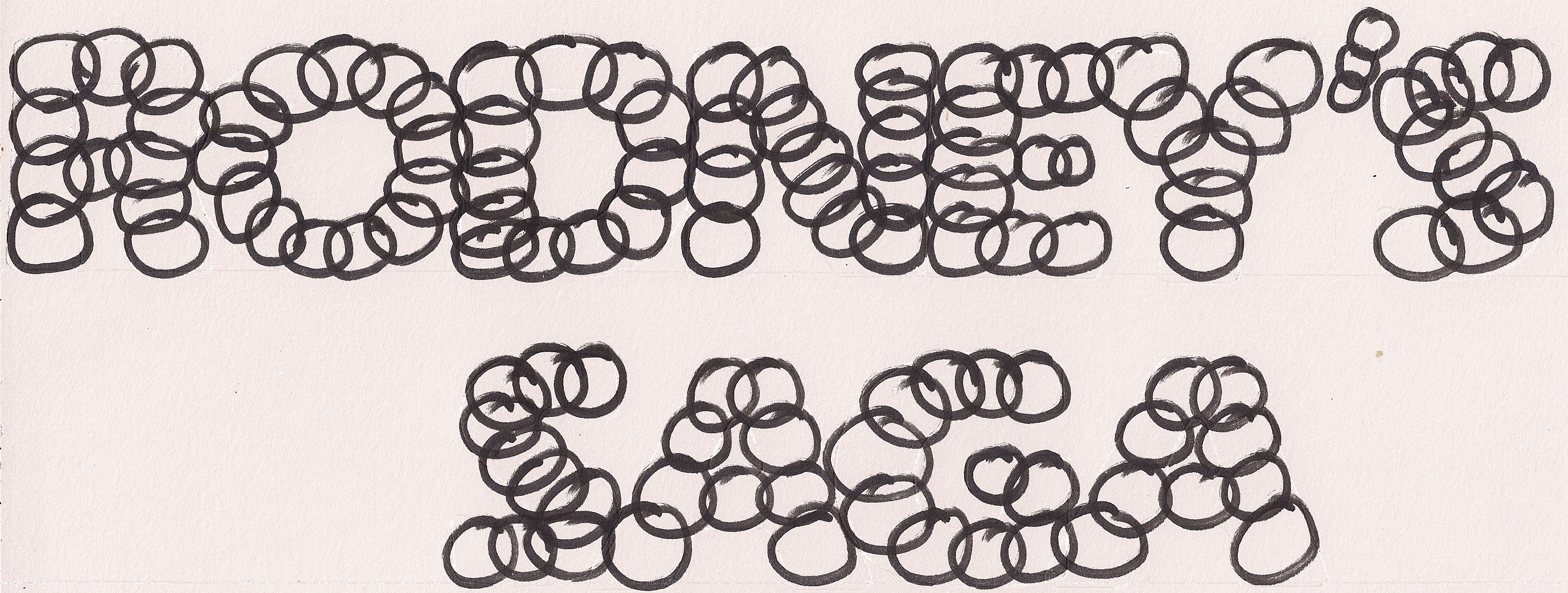
Yesterday’s letters all came from my truck, a 1989 F250 Ford Diesel:
tailgate minus decorative plate: FORD
front plate: FOURMILE FIRE DEPT
brand logo: Ford
tire: DYNATRAIL
front plate: FOURMILE FIRE DEPT
bumper sticker: SAFETY BELTS SAVE LIVES
keyhole
model id: DIESEL

model id: DIESEL
license plate: ALABAMA
license plate: FIRE FIGHTER
license plate: ALABAMA

Back In The Show Ring

jods 2

Today is the first Winter Tournament show. I have two points in my favor.

(Photo of the other jods I bought at Nationals [Paisley]. Suitable for lessons and schooling shows. Cheetah-print knee patches will be hidden when mounted. Seriously, never shop tired.)

Point the first: Cantering
Since jumping is (usually) done a canter, I have cantered in a show ring far more than I have trotted. Plus, I am more comfortable at a canter and often train self and horse better at that gait. So, I should be sitting pretty. Sure, I could still pick up a wrong lead, but the mere idea of cantering at the show doesn’t freak me out.

The ideal saddleseat canter is as slow as possible while keeping the horse bouncy and active. It’s the same canter that one uses to slow down for a roll-back in a jump off. It is the exact opposite of a racehorse stretching as long as possible to go as fast as possible. Fast and flat is straightforward to achieve. Slow and bouncy, ditto. Where one gets the big jumps, big ribbons, and big money, is going fast but staying bouncy.

However, this may not help me much. Saddleseat is all about the trot. As I understand the standard, an equitation judge will never say, OMG, look at that canter, I must place this person first. The best I can hope for is not to lose whatever credit I have gained at the trot.

Remember the fast yet bouncy canter for jumping that is so hard to get? That’s the tempo saddleseat wants at the trot.

Point the second: Work-off

pattern 2013 2

In an equitation class that calls for a pattern, the group works together on the rail, then each rider works individually. Judges for the Adult WTC class at Nationals have the option of calling for pattern work. They didn’t this year, but they might when/if I go. So, I am doing the pattern class at Winter Tournament for practice.

As with cantering, the idea of doing a pattern doesn’t fuse my circuits. The only rider? The judge’s undivided attention? um, okay. Been doing that since my first hunter hack class in 1979 (WBTA with Boogie). The equitation pattern is just the world’s shortest dressage test.

However, just because it’s simple, doesn’t mean it’s easy. Patterns are performed across the top of the arena, i.e. width of rather than length of. At least one of the Winter Tournament rings is quite narrow. This works out to a 10m canter serpentine with canter/halt transitions in the middle and at both ends. I’m not sure what level this qualifies as, but it is way above where I left off in dressage.

Ciao
Not all is fun and games. I will be bailing early. I must dress up and represent at a memorial for a former fire department board member & chair. Many of our volunteers are older. When the inevitable cycle of life overtakes them or family members, out comes the Class A. As a result, I have been to more funerals in uniform than in civilian black.

Talk about a range of human experience for one day.

Update: Hold that thought. Mathilda is feeling poorly, so I elected not to go. All of the above will apply at the January show.

In case you are curious, M needed a shot of Banamine on Wednesday night. Perked her right up but upset her tum. Ironic since it was used to counteract a possible incipient, mild colic. She is now bright-eyed & bushy-tailed but turning her nose up at all* food &/or treats. Vet says this is not unknown. Should be fine in a few days. He’s probably right. However, when one is dealing with the geriatric set, one worries.

I’m still planning on stopping by the funeral home. So, overall, today sucks.

*Update on the update – most food. She has eaten a handful of alfalfa leaves, a few laps of beer & will drink if we walk her up to the water trough, but not from her buckets. Sigh.

Update Saturday night: Mathilda has been gradually eating more all day & showed interest in her meal this evening. My crack medical staff started to question the accuracy of our digital thermometer. The new one registered a slightly elevated temp. Perhaps she got a bug subsequent to the stress of being stuck. Perhaps that’s why she lay down in the first place. Either way, a cautious yay!
_____________

Rodney photobombs the photo shoot.

Homework

After a reasonable successful lesson [On Task], my homework was to ponder body control through the transitions. Rider body not horse body. Getting control of the former is the only way to get control of the latter.

Not only am I used to taking breaks during a ride, I tend to take mini-breaks between each gait. ‘Okay, stop cantering. Whew, that was a lot of work. Time to get reorganized. Okay, let’s trot.’ All of this takes less than a second, but that is long enough for the horse to collapse into a heap. Instead of maintaining energy and momentum from gait to gait, I find myself reinventing the wheel each time.

Consider cross-country versus show jumping. In the arena, the rider is always approaching a fence. Landing from one jump leads immediately into preparing for the next. The horse is always in a canter suitable for jumping. OTOH, a horse can’t maintain that type of canter for an entire cross-country course. Gallop between fences, set-up, jump, back to gallop. This is why event horses need go-forward and come-back buttons reliably installed. And yes, I ride jumpers exactly this way. ‘Gee, that was a big fence. Aren’t we a slick pair. Huh? What? Another jump? Already?’

I think the issue is going to turn out to be mental rather than physical. After this many years in saddles, I have reasonably good proprioception. My body goes basically where I tell it to. Now I just have to tell it the right things. A much harder task.
_______________________
Gratuitous Cat Picture

Blue going after a green been on the front hall counter.
Blue going after a greenbean on the front hall counter.

On Task

Years ago, I was told that dressage means riding every stride [Square Horses]. Color me mystified. Previous Horse and I shared the foxhunter mentality. I tell you where to go and at what gait, you sort out the bits in between. As I’ve said earlier [Fifth Leg], it turns out that saddleseat is similar to dressage in demanding constant focus. Get on. Get to work. Do what is needful and get off. This is what the horses expect. If I drop the reins on an ASB neck for a walk break, I get back an equine ‘WTF?’

My goal for last week was to stay focused for the entire lesson. As soon as I got on, I picked up my reins, lifted my hands, and marched off with a sense of urgency. Whereupon Sam put on his lesson-horse hat, flung his head about, and said, ‘I don’t work like that.’ I insisted. By the time we trotted, he decided I was serious. We weren’t anywhere near show horse gaits, but I did step it up a notch from what we have done.

Sometimes I had to take and give with my hands. Sometimes I had to keep my leg on. Sometimes, I had to nothing and let him get on with his job. So, riding every stride does not mean doing something every stride. It means being ready to do something every stride.

I think.
_______________________
Gratuitous Cat Picture

Reason (Pudge)
Reason (Pudge)