Psyche Songs Sought

Lola’s songs worked great. I played them in the grooming stall before lessons. I played them at the stalls before the show. I even sang parts of them to her. “I met her in bar down in old Soho …” kept us at a walk more than once. “Her name was Lola …” would get us started trotting. By the time I got to “… yellow feathers in her hair …” we would be sorted out.

220px-Born_to-be_wild-steppenwolf-45Now, I’m compiling a second motivational mix tape/playlist for general use and for horses who don’t have their own songs. “Born to be Wild” by Steppenwolf is an obvious choice. I’m looking for others. Please note, I have the music ability of a pat of butter, so the beat must be unmistakable. Lyrics will stick in my mind better than orchestral music. With the exception of, say, the 1812 Overture. Even I can remember that tune.

Whatcha got for me?

(45 cover image from Wikipedia entry.)

A Bit of Progress

My lesson barn has plenty of brushes, However, the brush boxes have usually been mauled by munchkins, so I can never find the brushes I like to use. I bought a set to take with me. Picky, moi?

bitWhile I was at the tack store, I wandered into the riding section. Back when, I didn’t ride Rodney enough to settle on which bit worked best for us. Previous Horse and Mathilda both preferred fat simple snaffles, eggbutt and loose ring respectively. However for a big horse, Rodney doesn’t have a lot of room in his mouth. He objected to the fat mouthpiece. Plus, it seemed to me that a the point of a regular snaffle came too close to the roof of his mouth. I’m told that a straight bar is actually more severe. I settled on a 6″ knock-off German silver/copper French link. A Dr. Bristol looks similar but is a much harsher bit.

Hubby sees my willingness to spend money on a bit as a sign that tack is in Rodney’s future. I won’t go that far, but I will grant that finding a comfortable bit is the first step.

Tiger Whistle

original-xpHubby proposed a theory. If Rodney has been suffering from digestive upset, then perhaps he has long-term damage. Is there anything we could be feeding him to support/change/improve his digestive process? I asked advice from Karen Briggs, author of the book Understanding Equine Nutrition, the guest post The Oily Truth, and the blog Writing from the Right Side of the Stall. Briggs recommend nutritional yeast. I have placed an order for a bag of Diamond V.

Since we are trying to cure an ailment that may not exist in the first place, we may never know if or how well this works. Still, the idea of feeding Rodney’s gut flora seems logical to my medical adviser and the supplement is likely to be beneficial for general health. If Madame will condescend to eat any, we will try it on Mathilda as well.

Do you have any experience feeding yeast to horses, cows, people?

Book Source

cov DotyThanks to Paperback Swap, The Monday Horses by Jean Slaughter Doty (bio & bib, also here) is now in my To Be Read pile. I wonder if it will be as good as I remember. Thanks to Jennifer Bryant for introducing me to Paperback Swap. For the price of postage, my books go to good homes & I get free books in return.

Not a joke. See last year’s post for my thoughts on April Fool’s Day. In sum, unless very cleverly executed, pranks are merely socially acceptable cruelty.

Update: To prove that I have a vestige of humor, Google Nose is cute.

End of the Month Commentary: Identity

[Other End of Month posts]

flamingoI am clearly conflicted on my handling of personal details. My blog isn’t titled First Name Last Name dot com. I find myself reluctant to use my name or yodel on about where I live. Yet, my name is a byline on every writing clip. With that, archived author bios on Google show where I live. It’s hardly the witness protection program around here.

Paranoia
And yet, I do worry about unspecified Internet crazies storming my real or virtual driveway. I read one story about an Internet stalker [Meeting a Troll, summary on Gawker] and decide that the Internet is a wretched hive of scum and villainy. Such is the power of the story that it freaks me out even if it might not be true [point, counterpoint]. If this specific evil did not happen, a similar evil could happen, and furthermore will happen to me. I whip myself into a frenzy despite the fact that no reader has given me the slightest cause for alarm. Everyone has been universally polite, supportive, and interesting. We listen to anecdotes and ignore the statistical risk. Just because I recognize the silliness of this behavior doesn’t mean I can stop doing it.

Protection
My childhood was lovely but hardly carefree. I grew up in Manhattan. The earliest rules I remember involved when to cross a street to avoid getting squashed by a taxi, why not to go into Central Park at night, and how to recognize the dangerous and crazy among us. In any big city, 99% of the residents are perfectly decent human beings. However, in a city of 7 million, 1% is 70,000 people, one of whom might be next to you in a crowd.

I think not being forward with specifics is my reflexive equivalent of not meeting the eyes of the person sitting across from me on the subway. The lessons you learn young never leave you.

Content
But mainly, I’m not used to thinking of my identity as a part of the story. When I write an article with training tips from a Big Name Rider or barn advice from a Recognized Expert, the only name the readers want to hear is that of the subject. My name appears in the byline and on the check. The only two people who care about that are myself and the editor.

Sure, I buy Car & Driver when John Phillips writes an article, but who else other than writers read bylines or photo credits?

How do you address identity on the Internet?

That Moment

Jumpers don’t have it. Dressage waits too long. Hunters have it but don’t care.

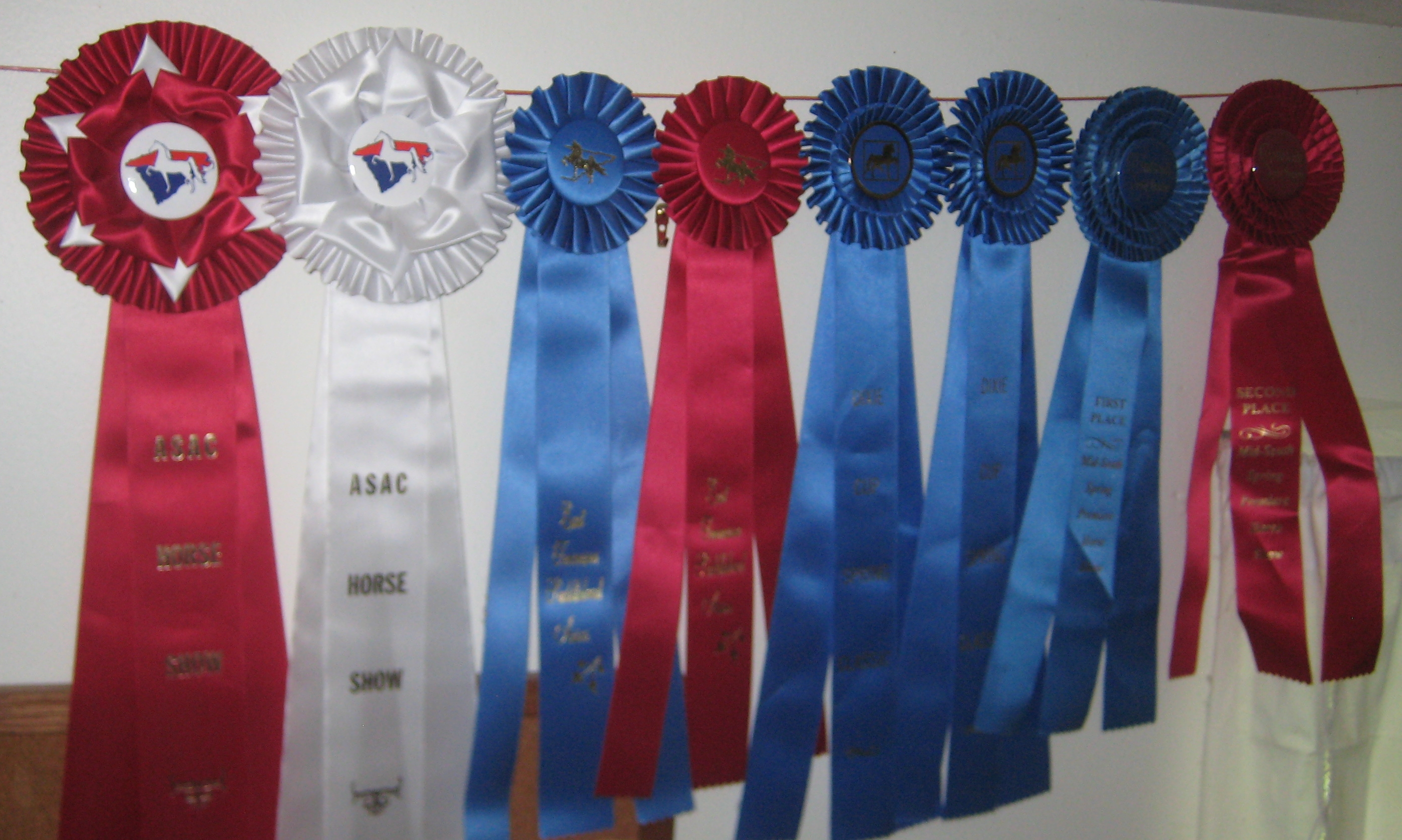
In jumpers, you know your results as soon as you cross the finish line. After a dressage test, you have to wait until the judges sheets are collected, the marks computed, and the scores finally posted on a wall outside of the show office. In a hunter flat class, the results are announced in the ring, but by that time you’ve already ridden in two jumping classes and the ribbons for the hack are an interesting afterthought.

In a Quarter Horse western pleasure class, Arabian costume class, or a saddleseat Academy Equitation Adult Walk-Trot class, the line-up is the last activity. After the horses and riders go both ways around the ring, after any individual tests have been performed, after last looks have been taken, horses and riders stand in line waiting for the results to be announced.

Maunter Photography
Maunter Photography
You let out a little sigh of relief. You pat your horse’s neck. You loosen just a trifle from a formal show pose. You sweat. You walk your horse in a circle if he refuses to stand. The judge has signed the class card and handed it to the runner who has handed it to the announcer. You are suspended in a vacuum.

Will the number they call out first be the one on your back? The number that you so carefully memorized before a friend pinned the piece of plastic or cardboard to your shirt, vest, jacket?

You might win. You outclass your competition by a visible margin. You made no mistakes. You won last week. However, if the judge has been replaced by a random number generator, you could lose.

You might lose. Your horse threw a fit in the second direction. You had to stop by squashing him into a corner. You forgot how to post to the trot. However, if your competition had an even worse day, if the judge was looking the other way, you could win.

The line-up is brief but interminable. You exist in two states at once. If you won, your riding was brilliant strategy. If you lost, you need to reevaluate. Until the results are announced, your performance is both at the same time. You tell yourself that your horse went well and that you will be pleased with any result. You lie. You hope to be gracious in victory. You promise to be sporting in defeat.

And the winner is …