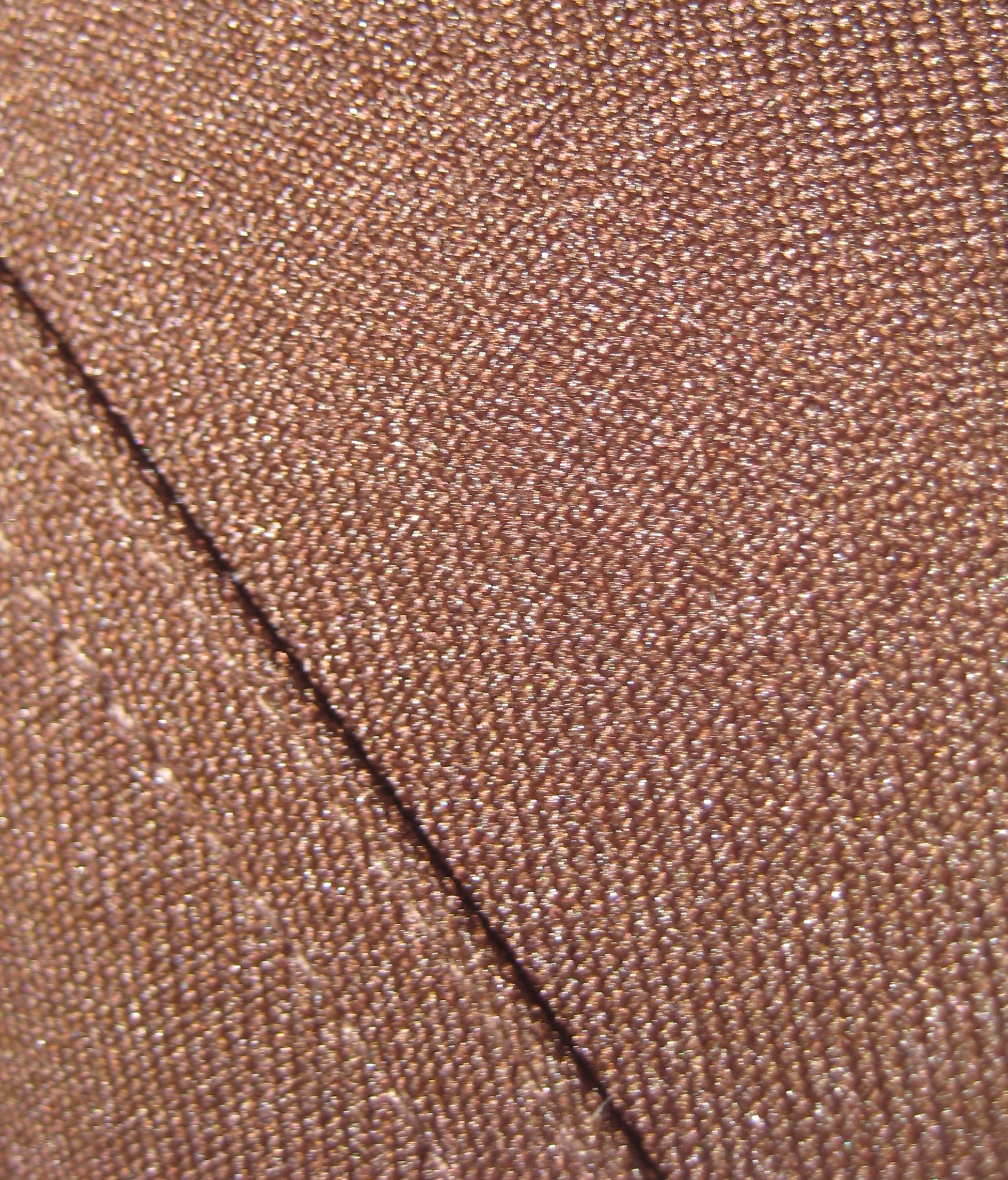
Detail of saddleseat jodhpurs.

Detail of a stable sheet in Stepping Stone Blue.
In answer to the Sunday Stills Challenge – Fabric
Discovered on Halt, Salute and .. Sunday Stills – The Letter F.
Horses & Other Interests
Detail of saddleseat jodhpurs.
Detail of a stable sheet in Stepping Stone Blue.
In answer to the Sunday Stills Challenge – Fabric
Discovered on Halt, Salute and .. Sunday Stills – The Letter F.
My monthly meta-post on blogging. [Previous posts.]
I have been a blogging fairy godmother, trapsing around the Internet, sprinkling electrons hither and yon, providing glass keyboards for those who wish to join the party. Which is an elevated way of saying that when your one tool is a hammer, you tend to see everything as a nail. Your barn needs a newsletter? How about using a blog instead? WHAM! Published essayist? You’d make a great blogger. Have you thought about starting one? WHAM!
So. for your enjoyment and taking more credit than I deserve, here are two blogs I fomented last week:
Stepping Stone Farm Newsletter
I have been yapping on about this barn for a while [saddleseat posts].
Been There, Done That
Kathie P. Mautner, the writer of BTDT, has been an excellent and most audacious fellow conspirator for many of my back-in-the-day adventures, as evidenced from her many photo bylines herein. She was also the owner of the Crazy Jumper Mare of whom I have spoken so fondly [pictured here, with blaze].
To quote from her introduction, Greetings And Salutations:
I’m well into the second half of my existence, more or less retired, and have always wished that I had a forum for stray thoughts.
To date, stray thoughts have covered ..
Perspectives
Reinterpreting old songs. Were they really so innocent back then?
Dancing with horses, dancing with guys
Comparing getting ready for a horse show with getting ready for a dance competition. A good ballroom dancing heat reminds her of a well-executed dressage test, but this time she doesn’t get to hold the reins.
Baubles, Bangles and Beads
You ain’t gonna see this color in the hunter ring.

A Brief History of Eventing
Where the three phases came from and why they were important in a cavalry horse’s career.
That’s just the first week. Go over and give her some Internet love.
~~~~~~~~~~~~~~~~~~~~~~~~~~~~~~~~~~~~~~~~~~~~~~~~~~~~~~~~~~~~~~~~~~~~~~~~~~~~~~~~~~~~~~~~~~~~~~~~~~~~~~~~~~~~~~~~~~~~~~~~~~~~~~~~~~~~~~~~~~~~~~~~~

As easy as …

American Saddlebred Sport Horse. Why not? I have been impressed with the friendliness and spirit of the saddlebreds I have met at Stepping Stone Farm. Even the ones too advanced for me to ride are friendly and interesting. At least it wouldn’t be yet another brown Thoroughbred, nor one more bog-standard European Warmblood.
Yes, we’d take flack in the dressage and hunter rings. For a fun and safe cross-country trip, I’ll put up with breed snobbery. My current thinking on horse shopping, subject to change without notice:
a) Something sane and reliable, not necessarily hyper-talented and gorgeous. Although, who doesn’t want both. Young & silly & cheap would be fine. Maybe I attend low level events, do okay in dressage, jump clean and come home with a pastel ribbon. A year or to of this and either my hyper-talented competition horse will have pulled his socks up, or I will be able to face looking for another one.
b) I’m kinda on hold with everything until I get my tooth fixed or pulled [Hi, Safe]. Not fighting a constant, low-grade infection in my head has got to make a difference in my ability to deal with the world. It did last time. I tell you, my teeth are a mess.
When I ran the ASB idea past friends, I anticipated virtual eyerolls. However, my horse hunt fairy godmother had this to say:
BTW, I actually love Saddlebreds as sport horses. What I love about them is they’re uphill, an excellent quality in a horse you want to gallop and jump. I’ve ridden a few and would never turn one down. Their backs can be a little weird to fit a jumping saddle to, but other than that they are very cool.
Having said all that, I’m going to look at a Thoroughbred this weekend.
Any other saddlebred sport horse supporters out there?
[Posts on horse shopping & on saddleseat]
~~~~~~~~~~~~~~~~~~~~~~~~~~~~~~~~~~~~~~~~~~~~~~~~~~~~~~~~~~~~~~~~~~~~~~~~~~~~~~~~
Update February 4, 2013: Winner declared.
Last chance to invent Rodney’s show name & win a prize. Explanation & rules here. Feel free to comment there or here.
The vet is coming Friday. The name I give for Rodney’s Coggin’s Test will be his show name. Of course, if I don’t show him at all this year (aaaagggg), I can try again with a new name next year.
But let’s think positive, he will carry Friday’s name throughout his long & glorious show career. It will be inscribed on perpetual trophies throughout the Southeast. His legions of fans will know him by this name due to all the equestrian media ink we will be floating in. The name will …. you get the idea.
What has changed since last year? I still have the blog, so a tie-in is not out of the question. No idea has wowed me yet. I want a name that is stirring and victorious and impressive, but not pretentious. An intersection that may not exist.
Fire away. Let the brainstorming begin.
Called another seller on Friday. Found yet another person who couldn’t be bothered to talk to me. I do not understand the business model that allows people to reject possible customers so quickly.
In her defense, we got off wrong-footed and she decided that her stock was too high-end for me. She might be right. In the Southeastern US, hunter/jumper horses seem to be expensive. There is not as much of it, so there is not the range of talent, training, and expense as in the Mid-Atlantic.
In addition, the Southeast is amazingly trainer driven. Buying a horse on my own is like trying to sell a novel without an agent. In MD/VA people worked with trainers, but also worked on their own. Some old coot with a few horses out back might be clueless, might be a retired MFH.
For those of you who have lived and ridden (or shown dogs or knitted (knat?)) in different places, how has the attitude toward independent operators varied?
Horse Shopping posts.
BrickFair was fun, but not as much last year.
First off, I offered to be a Theme Leader. I stepped in at the last minute after the previous volunteer broke an important moving part just before the convention. I had no clue what I was doing, but the duties where easy enough to understand. Take one section of the show, help exhibitors arrange their displays, set-up, take-down.
Unfortunately, the sign-ups in my area were such that I had 12′ of display for 20′ of table. Between Friday night and Saturday at 11 am, I had to fill 8′ of blindingly blank white tablecloth by force of will. Naturally, I couldn’t finish the final set-up until I had the displays taken care of. By the time the public was admitted, I was exhausted.
For an equivalent equine experience, imagine you have offered to fence judge for the first time. You understand the rules in theory, but have never had a live-fire drill. You are assigned a single vertical in the middle of the field. Simplicity itself. Then, the neighboring farmer lets cows out in the adjacent field. Suddenly, you have stops, falls, run-aways, flag-waving, and so on. In short, your fence turns in a hairball.
Plus, a comic artist and frequent convention goer had these words of wisdom by which that I failed to live, “Now I know that I get to pick one thing to skimp on: food or sleep. But I can’t skip both or I get a visit from the plague monkey.”
Finally, it was my second BrickFair. Last year had the element of novelty. This year had the element of, ‘Oh, another BrickFair. How nice.’ On the other hand, and the point I wish to make, is that my reaction to the second saddleseat show two weeks ago was, ‘Oh! Another horse show!! Whoopeeee.’
The message is and continues to be that I really, really want to do the horses. When I was a teen, I moved away from LEGO building when I started riding regularly. I suspect that if I am ever getting three horses fit for Preliminary – or one horse fit for Novice – the LEGO habit will suffer once again. Nothing gets in the way of the horses.
At this point, anyone who has read more than one post on this blog is saying, “Duh. We knew this days/weeks/months/years ago.” What can I say. Things that are obvious from the outside are less so from the inside.
More LEGO posts.
 Virtual Brush Box