Thoughts During Morning Chores

Why stalls?

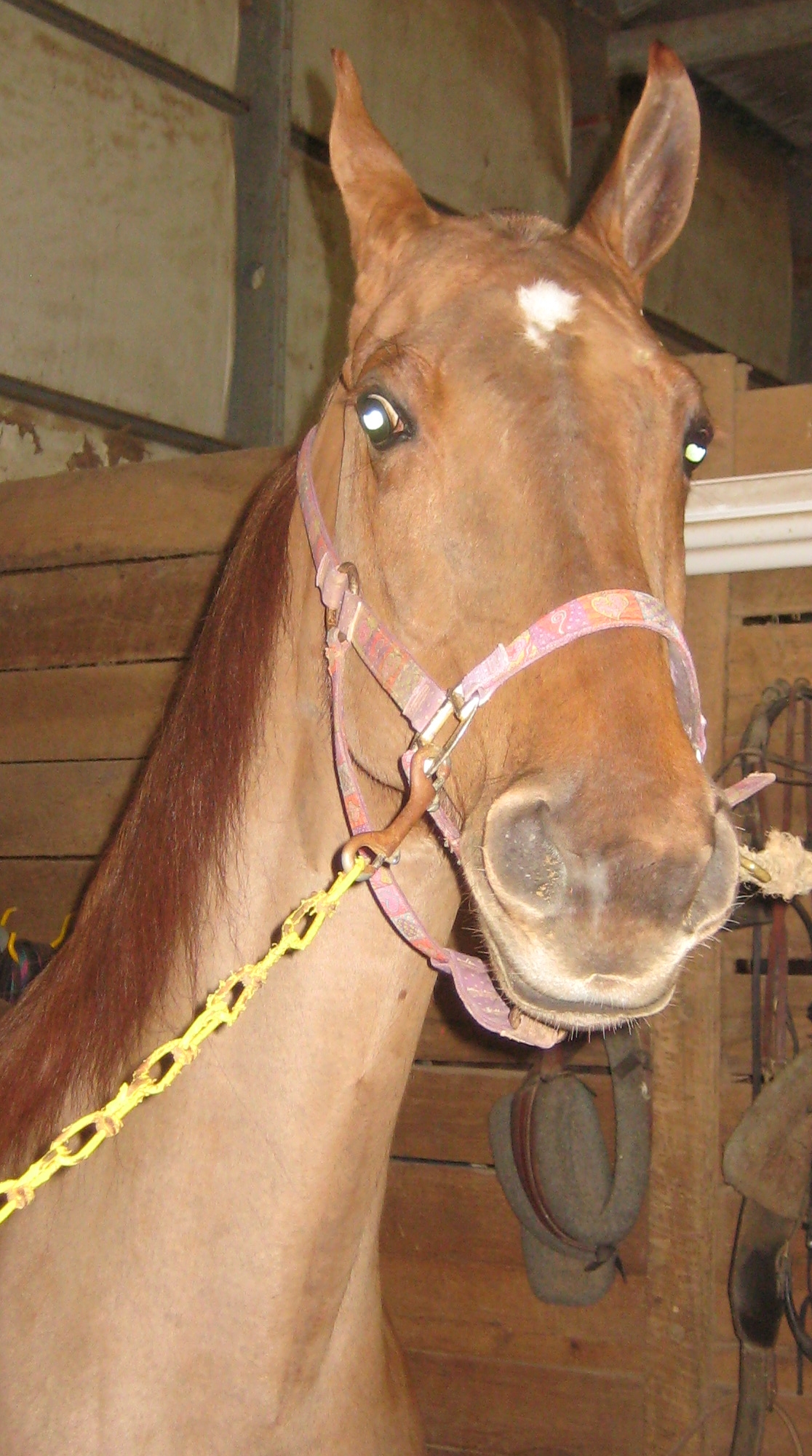
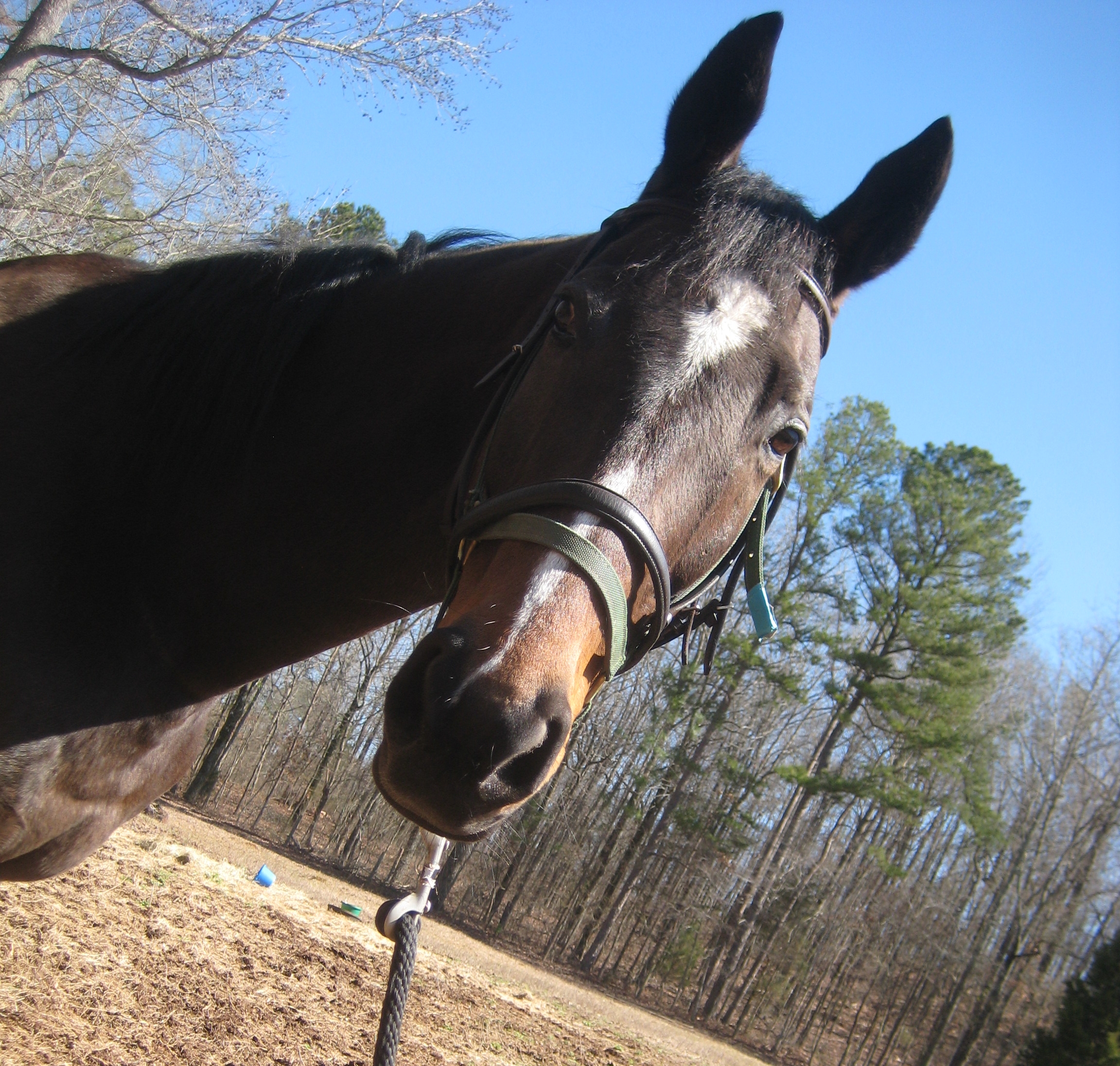
How did my life get arranged that I am cleaning up after two horses, one two dogs, and four cats? (The other dog and the three adult cats are still on the low-maintenance plan.) How did horses go from in front of the cart to getting a ride in the back? Why is so much of my day spent relocating poop from here to there?

This is not modern question. When horses pulled carts and trams and carriages in the city, they had to live close to where they were needed. Can you imagine the manure pile in the middle of Manhattan? Cars were seen as an improvement from the unsightly, smelly mess of the then-current transportation system.

Manure moving most likely dates back to the beginning of domestication. As soon as we put animals in a particular place for our convenience, we had to deal with the fallout. So to speak. It’s no different from people, I guess. As soon as you concentrate a bunch of digestive systems in a given space, you have sewage.

And on a separate note, may I add how hard it is to type cHORES instead of cHORSE? After all these years of eq writing, my fingers are on autopilot.
____________________________________________________________________________________________________________________
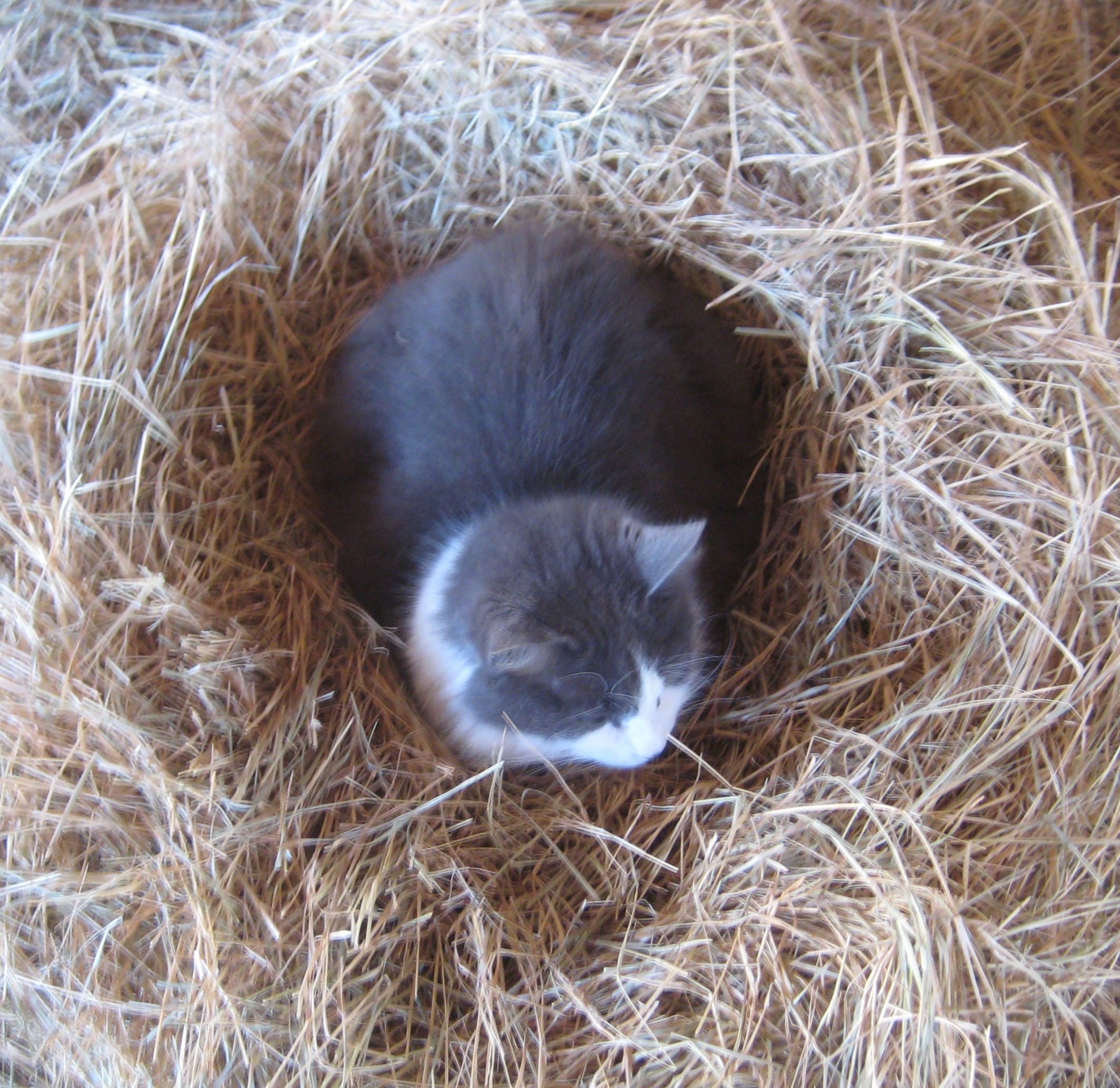
Gratuitous Kitten Pic

Guest Post: Amy Kilkenny on Equine Bookplates

1980 – Amy & I were thrown together as freshmen by the college housing department.
1988 – Amy was the maid of honor at my wedding.
2014 – Amy’s daughter will graduate from our alma mater. This fact freaks me out on a regular basis. The fact that her graduation coincides with our 30th is a tidbit I do not care to contemplate. Welcome Amy:

Katherine was one of the first people I met the day I arrived on our college campus. My memory of our first interaction involves her sitting on the upper bunk in our freshman dorm room, literally springing into action as she jumps from the bed to the floor to help my dad and me carry in a station wagon load of stuff. You learn a lot about a person by the items they choose to bring into an extremely cramped dorm room; one look at the riding boots beside Katherine’s bed and collection of paperback books on her desk and made it obvious that two of her favorite hobbies (only later would I learn they border on obsessions) are riding and reading.

So, more recently, when Katherine asked if I would like to post a piece on her blog, my first thought was to appeal to these long-standing loves. Since I currently work as a librarian, I also desired to use this opportunity to highlight the amazing resources housed in libraries. For the past few years, I have volunteered for the Auerbach Art Library of the Wadsworth Atheneum Museum of Art in Hartford, CT. The art museum library has numerous special collections, but I chose to search the Hettie Gray Baker Collection of bookplates to look for images of horses to share with blog readers.

Customarily pasted just inside a book’s front cover, a bookplate indicates ownership. In addition, bookplates allow book owners to express their personalities, family histories, or outlook on reading and libraries. Therefore, I approached this project as an opportunity to provide a brief, but hopefully illuminating and entertaining, glimpse into bookplate owners’ attitudes towards horses and their relationship to literature and libraries.

Hettie Gray Baker began amassing her bookplate collection in the early 1920s, only to donate a large portion of her holdings to the art library of the Wadsworth Atheneum a few years later. The bookplates Ms. Baker collected reflected her interest in early film stars, authors, artists, libraries, clubs, societies, and noted Hartford residents. Over the years, the Auerbach Art Library has added to Hettie Gray Baker’s original donation; today, the collection holds more than 2,000 bookplates. Although I was able to look through a small portion of the collection, I found five examples I thought blog readers might enjoy:

Bk Pl Edward W. Nash book plateFour of the five examples include horses in medieval-type settings. Here, the horse lowers its head as he carries his rider into a world dominated and defined by both sunlight and the promise of an elaborate castle. Presumably the bookplate patron was the Edward Watrous Nash (1846-1905) who served as president of the American Smelting & Refining Company. Mr. Nash was described as “a keen observer who read broadly, thought deeply, and, possess[ed] a retentive memory.” Wakeley, Arthur Cooper. 1917. Omaha: the Gate city, and Douglas County, Nebraska. Chicago: S.J. Clarke Pub. Co., Vol. 2, p. 72.

BkPl Newark Public LibraryA second bookplate reveals a somewhat similar image of a horse carrying a rider with a castle in the background. However in this depiction, medieval knights appear to be travelling away from the protection of the castle into a wooded world of adventure; the previous image can be interpreted as a depiction of a rider arriving at a fortress. Both bookplates portray worlds of possibility and stories to come, especially relevant here as this bookplate was created for the children’s department of the Newark Public Library.

BkPl J .G. McKinna book plateA third bookplate continues with the armored medieval knights theme to depict a jousting scene. The horses wear minimal armor as the knight on the right appears ready to vanquish his opponent. Although this bookplate is relatively unusual in the Auerbach collection for its coloring, I have not been able to positively identify a J. G. McKinna who might have commissioned this plate prior to the 1920s.

BkPl Percy Neville BarnettThe swirl of the rider’s flag draws attention to the knight and horse depicted on a bookplate for Percy Neville Barnett. The horse’s head pushes beyond the frame of the image in a show of bridled energy and power. It is possible that the bookplate’s patron was the Percy Neville Barnett (1881-1953) who authored numerous books on Australian bookplates, woodcut bookplates, and Japanese prints.

BkPl Alexandrine McEwanThe final bookplate remains an image of intrigue. Bookplate artist George W. Plank created this piece for Alexandrine McEwen (1876 – 1955). Although some information about Ms. McEwen has been located, most notably that she was a founding member of the Detroit Society of Arts and Crafts and owned a ranch in Arizona, questions about the bookplate and its imagery remain. Are the circles that surround the horse’s head bubbles? It almost appears that the horse is in a bubble itself. Any thoughts would be greatly appreciated!

When I started this project, I thought I would find bookplate depictions of bookplate owners’ horses or farms. My brief search of the Hettie Gray Baker Collection did not yield any such results, but I do hope you have enjoyed viewing these fun and fascinating examples of horses in bookplate art!
~~~
The images are courtesy of the Auerbach Art Library of the Wadsworth Atheneum Museum of Art, Hartford, CT.

The Bookplate Society: An international society of collectors, bibliophiles, artist and others dedicated to promoting bookplate study.

When I Was a Colt I Served a Term

Rodney's Saga-Flying Pony StudiosApologies to The Rt. Hon. Sir Joseph Porter, K. C. B.

I am the monarch of the field,
The ruler of the barn’s possee,
Whose praise all horsedom loudly chants.

When on sunny days I stroll,
My bosom swells with pride,
And I swish my tail hairs at the fillies’s taunts;
But when the breezes blow,
I generally go inside,
And seek the seclusion that the indoors grants;

When I was a colt I served a term
As pony boy to an racehorse barn.
I lead the stallions and I led the mares,
And I polished off the carrots that they handed me.
I polished off the carrots so carefullee
That now I am the ruler of the barn’s possee!

As pony horse I made such a mark
That they gave me the post of a lesson horse.
I walked the ring with a smile so bland,
And I vaulted all the poles with a big round trot —
I vaulted all the poles in a trot so free,
That now I am the ruler of the barn’s possee!

In carrying the kids I made such a name
That an Pony Club horse I soon became;
I wore clean sox and a brand-new saddle
For the pass examination at the academy,
And that pass examination did so well for me,
That now I am the ruler of the barn’s possee!

Of equine knowledge I acquired such a grip
That they took me into the show horse barn.
And those show horse classes, I ween,
Were the biggest jumps that I ever had seen.
But that kind of jump so suited me,
That now I am the ruler of the barn’s possee!

I won so much that I was sent
By a bunch of ribbons into championships.
I always jumped at my rider’s call,
And I never thought of stopping at the fence at all.
I jumped so high, they rewarded me
By making me the ruler of the barn’s possee!

Now horses all, whoever you may be,
If you want to rise to the top of the tree,
If your soul isn’t fettered to the pasture life,
Be careful to be guided by this golden rule —
Stick close to the rail and never run away,
And you all may be rulers of the of barn’s possee!

Illustration by Flying Pony Studios
Original lyrics per the Victorian Web page. According to these folks,

The character of Sir Joseph Porter in terms of business background resembles that of bookseller William Henry Smith (1825-91), who had entered Parliament in 1868 and had been appointed First Lord of Admiralty in 1877, Smith having made a fortune through expanding his father’s bookselling business in the Strand by setting up railway station bookstalls and newsstands to become Britain’s biggest bookseller and newsagent.

As in WHSmith. Cool.

Art Appreciation

Oil on repurposed wood, ~3 1/2 x 5 1/2, reproduced slightly larger.

Artist’s Commentary: “I did a larger version as a gift for my oldest daughter (16 yrs old) – she was my inspiration – to me her beauty is that of a stallion – high spirited, powerful and full of life and color! it’s how I see her and hope that she will grow to see herself.”

From card: Isaiah 61:3

Found at my feedstore & now hanging in my office.

Random Acts

A while back, a horsewoman of my acquaintance was recounting a barn fire she had suffered several years previously. It was as terrible as you can imagine and worse. Take that as a given. The part that touched me was the aftermath.

The outpouring – cliche but there is no better word – of messages and emails was instrumental in pulling her out of the darkness and back into the light.

A stranger from another region of the country sent a bridle. Five years later, my friend still had wonder in her voice over this anonymous gesture of support.

The moral
When you are moved to do some small act of kindness, do it. Don’t talk yourself out of it. Don’t think – as I have done – that your gesture is too small to matter. You may never know how it turns out. Chances are the kindness of your act will far outweigh the material benefit.

Go forth & do good.

Random acts of kindness you have done or received?