Surprise Attack

Mathilda (horse) has taken an aversion to Lady (dog). Before, she had left the dog hassling to Previous Horse, who had a zero-tolerance dog policy. Now, Mathilda has taken up PH’s mission of keeping the field clear of dogs. Therefore, while Mathilda has been unsteady in her back end, Lady has been confined to her 1/2-acre dog purgatory in the front yard. She is not pleased. Vocally. This morning, Lady proved that she has been improving her door-opening skills & joined us for the pre-breakfast graze.

Lady bounced about, happy to be free. Mathilda vacuumed up the grass. I juggled leadrope and tea mug. Suddenly, Mathilda pinned her ears and went after the dog in a lunging, hopping maneuver that involved a moment with all four of her feet off the ground. I yelled. Horse and dog froze. It was hard to tell which of the three of us was more startled.

Years ago, Hubby & I were driving around Hunstville, AL, in our old VW Jetta. Suddenly, a set of railroad tracks came out of nowhere. We were going a wee bit faster than the engineers had in mind when planning the road crown. Inspired by being in Rocket City, Hubby launched the car over the tracks. All four wheels off the ground. We were airborne long enough for me to think, ‘Okay, this is weird!’ This morning was like that. Both car and mare were/are big, heavy, black things that you don’t expect to see off the ground.

If I could trust her, I would be thrilled to take this as a sign of improved health. Unfortunately, recent history [Life Lessons] has show that Mathilda is listening to the hormones & pain-killers swirling through her brain, rather than the cautionary messages coming from her back legs.

What was the most recent (pleasantly) surprising thing your horse has done?
Somebody Else’s Problem. Worthy Cause II

Rodney’s backyard.

The Equine Land Conservation Resource won the 2012 American Horse Publicationss Equine Industry Vision Award, presented last weekend at a breakfast hosted by Pfizer Animal Health [more payback].

Equine Land Conservation Resource “is an educational and networking resource for horsemen and communities. Since all land is saved locally, we provide the information horsemen need to protect horse lands and trails in their home town.” They ask, “Where will you ride, drive, compete, race, raise foals, and grow hay in the future?” [Bold mine.]

I have enough room to ride, don’t trail ride, don’t raise foals & barns in my area opening rather than closing. So why should I care? Because a decline in the horse industry will effect me eventually. Worldwide population is urbanizing. That means fewer kids growing up in horse/farm families. To draw urban residents into riding, ELCR estimates that barns need to be within 30 miles of an urban center. So, loss of land in the densely-packed BosWash corridor will ripple out to the farthest windswept reaches. If the number of riders shrinks dramatically, entries will go down at shows, and shows will have to consolidate or fold. Ditto tack stores, vet clinics, and magazines for which I write.

I am tempted to quote Niemöller but that seems disrespectful [exegesis here]. Still, the underlying sentiment holds. Other people’s problems are my problems.

What are your equine land requirements? Are they being threatened?

Why Bother? Worthy Cause I

One of my hosts.

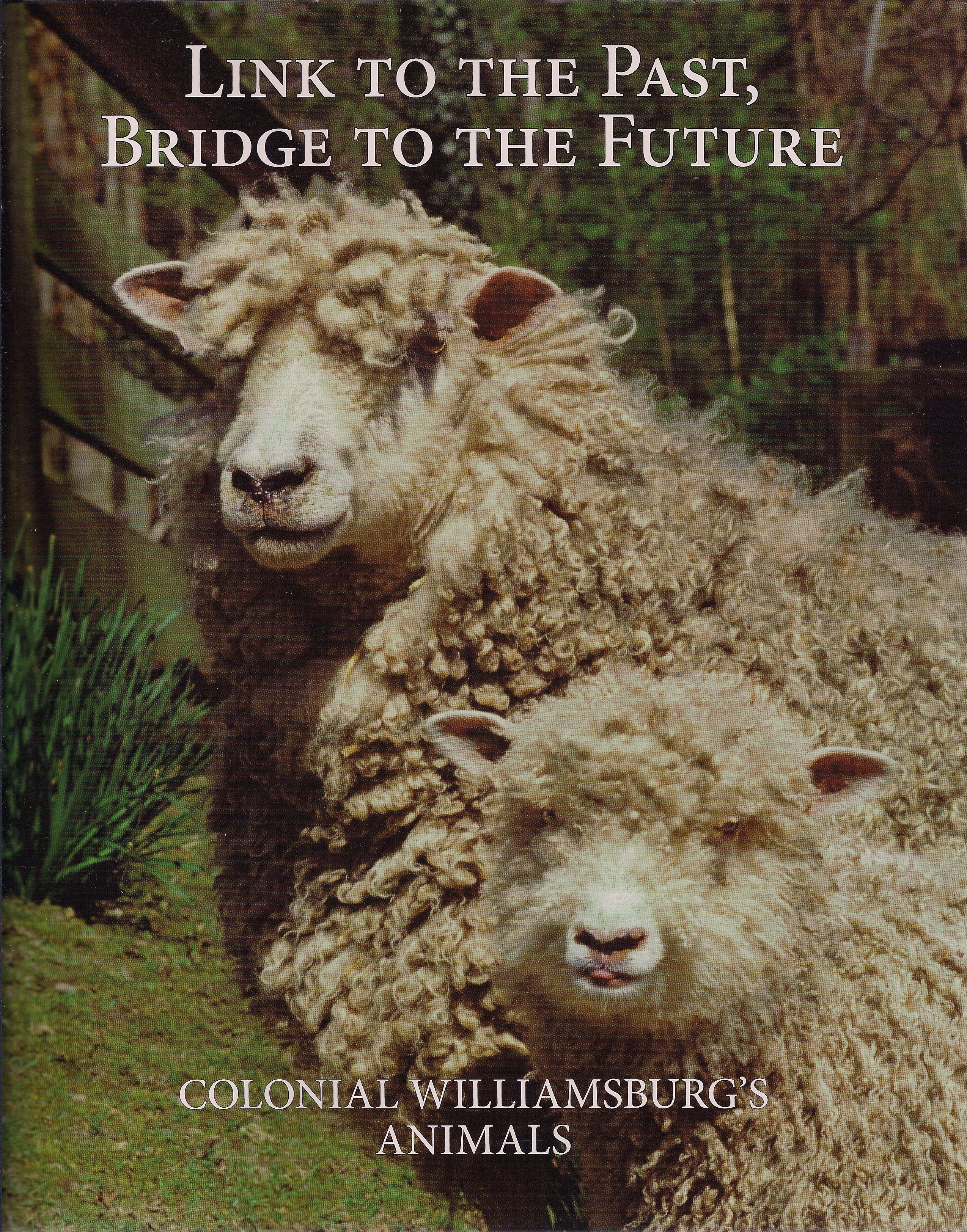
At Colonial Williamsburg last weekend, I attended a welcome reception at Colonial Williamsburg Stables sponsored by Alltech with shuttle service between the Woodlands Hotel and Colonial Williamsburg Stables sponsored by the American Quarter Horse Foundation (gotta work the payback). At the reception were spokeschickens for Colonial Williamsburg’s Rare Breeds Program, which also covers oxen, sheep, pigeons and two horse breeds, the Canadian & the American Cream Draft.

The Williamsburg program is affiliated with the American Livestock Breeds Conservancy whose mission is “Ensuring the future of agriculture through the genetic conservation and promotion of endangered breeds of livestock and poultry.” Although I hope to convey their intent, the following philosophical musings are mine. Blame not the ALBC or the Williamsburg Rare Breeds Program.

Right now we raise and use our cows, horses, chickens, and so on within certain patterns of weather, energy usage, farm size, nutrition requirements (theirs & ours), recreation, and so on. What if any of these elements change? What if the only available animals where unable to live outside of that vanished lifestyle? Rare breeds are a genetic bank for the future. Plus, many of these breeds, such as South Carolina’s Marsh Tacky, are specifically adapted to their region.

Colonial Williamsburg works to preserve breeds that help accurately represent 18thC Virginia (book photos). Other ALBC Watchlist critical breeds include 10 Colonial Spanish Breeds, some of which, e.g. Florida Cracker, are Official State Horses. It would be embarrassing, if nothing else, for a state to have a Official State Horse go extinct under their watch.

But even if there where no practical reasons, why not save them? Can’t variety be its own argument? We don’t all wear functional jumpsuits and eat nutritionally-optimized algae cakes. Let’s have a little style & flair in our chickens as well.

So, should we bother to save rare breeds?

Welcome Home

Yesterday, I got back from a five-day work-slash-vacation trip [AHP 0,1,2]. The reactions were varied:

I know Hubby missed me because I know how much miss him. Nothing cutesy about it. Our farm routine is optimized for two people. Therefore when one of us goes away, the other has signed up for several long days. The return conversation runs along theses lines: I’m glad you’re home … I’ve missed you … I’m exhausted … I’m going to bed.

Rodney didn’t remember exactly who I was. He jumped a bit when I patted him. However, once I showed an interest in loving on him, he was willing to be my best friend. R is a trifle indiscriminate in his affections.

Mathilda is equally indiscriminate. She doesn’t care which of her minions grazes her, cleans her stall, fetches her hay, serves her meals, walks her to the water trough, and on, and on.

Since Lady [Barn Dogs] is irrationally terrified of Hubby and irrationally attached to me, one would think that my departure would be traumatic and my return would be joyous. Unfortunately, she’s such a neurotic little soul it’s hard to see a difference. Little? Yes. She may weigh 80 pounds, but at heart she’s a teacup Chihuahua.

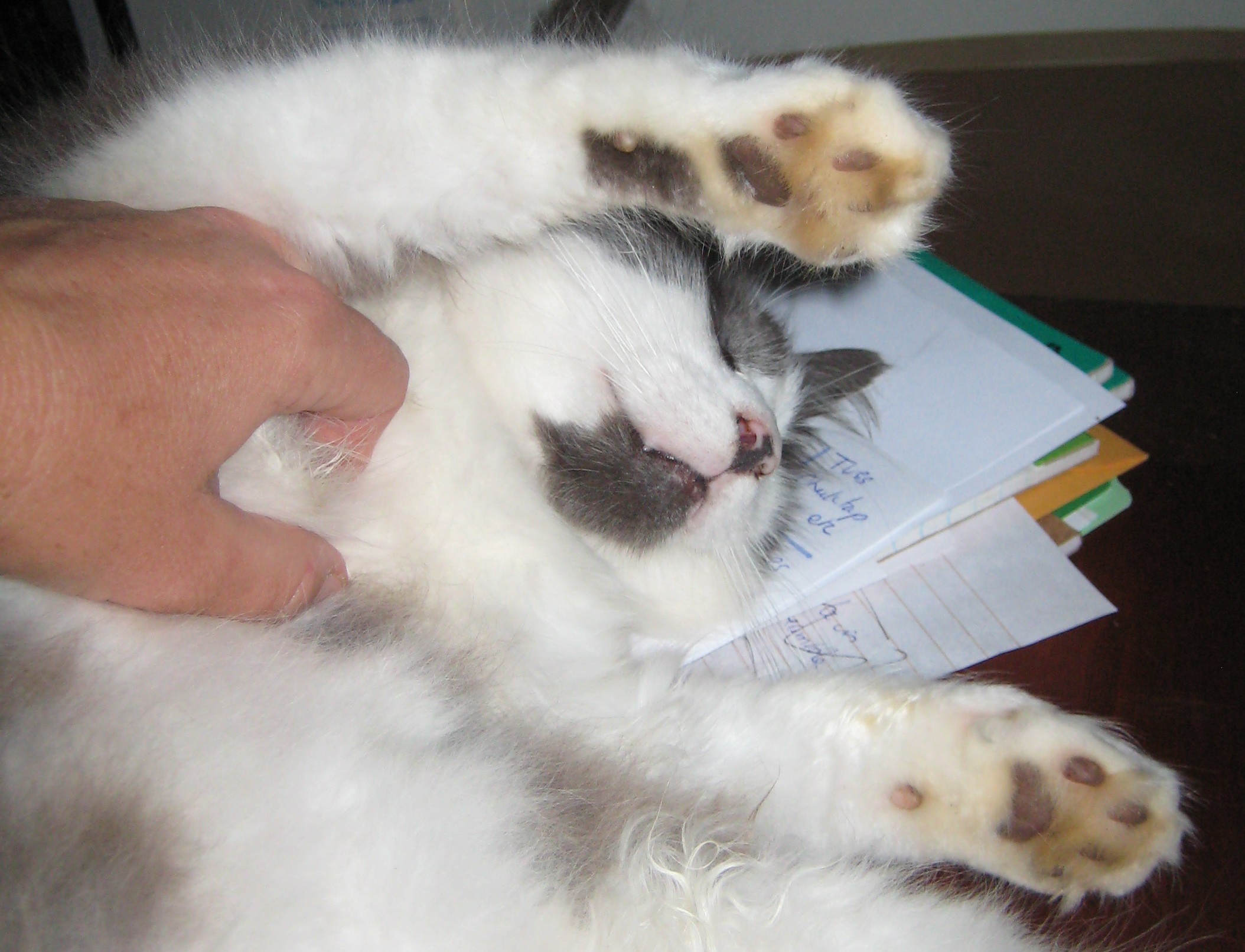
Of course, the weekend was hardest on one of the cats. Not nearly enough time was spent on the Adoration of Arthur [Return]. An oversight that I am being forced to rectify.

Purrrrrrrrrr.

Do your beasts miss you?

Bucket List – Accomplished

To counteract the thread of greed that runs through my Bucket List, herein a list of things that would be on my bucket list if I hadn’t already done them.

(What to call it? Filled bucket has stall-cleaning overtones. The anti-bucket lists in the ether where all things that people had no intention of ever doing. For example, Maria Ciampa’s Small Seat or Stoop List [as in overturned bucket]. Gotta say, I’m with her on the Brazilian. (I made a note of this post back in March. It has since been removed. Given my comment, you can imagine the contents.))

I am grateful for having…

+ Ridden at the National Horse Show, also, Washington International, Penn National, and Devon. Before you fall over in impressed faint, I rode in the side-saddle classes. Qualifying meant sending in a check. Side-saddle is a way for normal mortals to fly at these rarefied altitudes. I’m not bitter about the fact that I rode in the National the first year it moved from New York City to New Jersey. Really. Not bitter at all.

+ Won all my classes at a show. A small, one-day show. In one of the jumper classes, I was the only one who knew the correct procedure. I’ll take it.

+ Ridden abroad. I’ve done this twice. Once exercising an Italian racehorse and one on a French tourist ride. On the French ride, everyone expected me as the experienced rider to be thundering about. I can run amok on crazy horses any time. I meandered about slowly, enjoying the ride and watching the countryside.

+ Seen the Budweiser Clydesdales in person. One time, a rookie driver snarled the team and you could just about hear the horses think, ‘What is this clown doing?’ As you might imagine, tacking up the horses takes forever. Yet they stand quite still, pleased to the tips of their feathers* that they are Budweiser Clydesdales.

+ Seen the changing of the Queen’s Life Guard in London, (also here). You can have the dudes in furry hats, I went to see the horses. All mounts were beautifully trained & turned-out. The older campaigners stood like statues. A few younger ones kept their feet immobile but would indulge in the occasional head toss from sheer exuberance.

+ Ridden a jumping schoolmaster. She was so reliable, I remember coming out of a corner for a fence on the diagonal and knowing, with iron certainty, exactly where she was planning to put her feet 6 strides away. I was there to count the jump numbers and point out which one came next. I never made the mistake of thinking that our success made me a brilliant rider. It was all her.

+ Attended the biggies: many, many Rolexes (Rolexi?) [Peregrinatio], the Atlanta Olympics, the Rome World Equestrian Games, & the Lexington WEG.

(*Yes, feathers. The fluffy part of their long white socks.)

Whats on your accomplished bucket list?

Magazines & Me

American Horse Publications Day 2

My first article in an equine magazine was a show report for The Chronicle of the Horse in the late 80s. My most recent was a short interview on equine jobs for USDF Connection. I’ve learned a bunch over the years, not all of it concerning the content.

We differ by discipline. Dressage riders have theories. An interview with a dressage expert is simplicity itself. Ask a question. Press go. Try not to run out of tape. Jumper riders are more right-brain based. What did you think of the course. “It was good.” How did the course suit your horse? “He went well.” Eventers fall in the middle of the continuum. Paso Finos are all about the sound. Those clever little hooves are moving way too fast for human eyes to follow, so aficionados listen to the rhythm, “the judge may even look slightly away or down to concentrate on the sound of the hoof beats’ rhythm going over the sounding board”. [FAQ]

We can’t speak. Few of us speak in full sentences. We stop. We rephrase. We wander off on a tangent. Even the blessed few who speak in a straight line can’t get through a sentence without, you know, verbal tics. Tape yourself a few times. Thou shalt be appalled. I learned to speak more clearly just so I didn’t shudder as I transcribed tapes.

The writing advice is wrong. Write what you don’t know. The first time I wrote about the Rolex Kentucky 3-Day Event for the then-AHSA, I had hash out what was true from what I thought was true. Much of the latter wasn’t. When I interviewed a pest control expert on mosquito breeding habits for The Horse, I didn’t know enough to make a mistake.

A horse job doesn’t necessarily help your riding life. There have been outside benefits. From one interview, I met a trainer who went on to help me make the switch from eventing to jumpers with Previous Horse. From another interview, I found out about a rental farm when I finally got to have my horses in my own backyard.

As for actually helping me on horseback, not so much. They say read as much as you ride. The implication being to read more. I need to read less. I’ve written about the transition from Intermediare to Grand Prix in dressage as one of the biggest steps on the ladder. I have yet to fight my way out of First Level. I can analyze a jumper course that I couldn’t begin to ride. I can point out the terrain questions on a three-star cross-country & panic over Baby Novice log. Less theory, more saddle time.

How has your day job informed your riding? If riding is part of your day job, how have the other duties (lessons, marketing, updating owners), influenced your riding?

Previous AHP posts
Day 0 Permanence
Day 1 Foto Friday: The Old Grey Mare